
Almost every host has a folder lying around with the wifi code and the house rules. Almost no guest reads it from cover to cover. That is a waste, because a good welcome book saves you messages in the middle of the night, prevents irritation and demonstrably earns better reviews. The difference is in what you include, and above all in what order.
Start with the three things they need right now
A guest who has just arrived has three questions: how does the wifi work, how does the heating work, and where do I sleep. Put those at the top of the first page, large enough to read from the sofa. Everything else only gets read once those three are answered.
Make the wifi details easy to copy: set them apart, in a large font, without characters that cause confusion. A capital i and a lower-case L look identical, and that is guaranteed to earn you a message.
Explain the appliances that are not self-evident
Everything you operate without thinking is new to a guest. The induction hob you have to unlock first, the shower that stays cold for a while, the wood stove, the heat pump that should not be set to 25 degrees, the remote with four buttons that appear to do nothing.
For each appliance, briefly describe how it goes on and off, in plain language and with a photo. One picture of your own tap is a hundred times clearer than the manufacturer's manual.
Make your house rules friendly, not forceful
House rules are necessary, but the tone decides how they land. "No smoking" reads differently from "This is a smoke-free house, there is an ashtray on the terrace". The second is just as clear, but your guest does not feel like a child.
Explain the reason when something is unusual: the neighbours work nights, the septic tank cannot handle wet wipes, the dog cannot be on the sofa because an allergic guest is arriving. With a reason attached, people stick to it far better.
Give local tips that are not in the guidebook
This is the part guests genuinely read and mention later in their review. Not the ten best-known sights, but your own list: where the coffee is actually good, which walking route stays passable in the rain, where the bakery opens on Sunday, which terrace catches the sun at five.
Make it personal and specific, with names and distances. Five good tips are worth more than thirty generic ones. Include what is not worth the trip either, which is surprisingly appreciated.
Settle the departure in advance, it saves hassle
State clearly what you expect on departure: check-out time, what to do with the rubbish, whether the dishwasher should be emptied, where the key goes. If this only becomes clear on the morning of departure, it goes wrong.
Keep it simple, ideally as a short list. Do not ask too much: every extra task can come back in your review. Two or three points is enough.
Make sure it looks the part
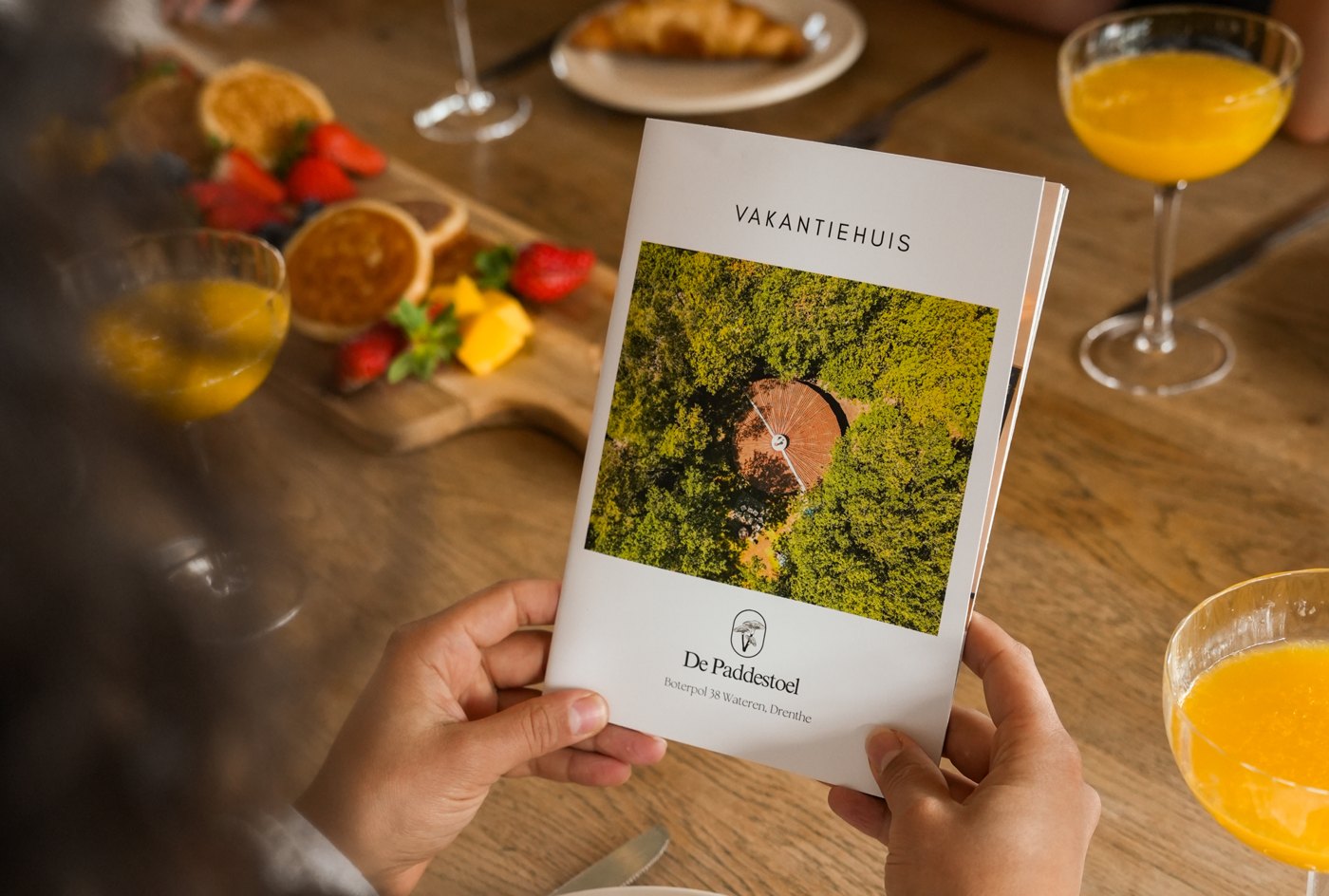
A printed Word document in a plastic sleeve undermines the impression your interior has built up. Your welcome book is part of the experience, just like your towels and your coffee.
Use the same fonts and colours as your website or listing, add a few of your own photos and print it on decent paper. A simple, well-made booklet looks better than a thick book full of text.
Offer a digital version too
Many guests prefer to read on their phone, and some want to know how the key safe works before they arrive. A digital version as a pdf or web page, shared through a link or QR code, solves that.
Put the QR code by the front door and in the kitchen. That way a guest can find everything again without hunting for the folder, which tends to disappear into a drawer by the third booking.
Update it once a season
Nothing costs you trust faster than a tip about a restaurant that closed last year. Put fifteen minutes in your diary twice a year to check addresses and opening hours.
Adjust your seasonal tips at the same time. In winter a guest wants to know where to get firewood, in summer where the quiet beach is. Same book, different page.
A welcome book is not a manual. It is the first time your guest notices that you thought about them.
Start small: put the three essentials up front, add five genuine local tips and lay it out properly. That version already beats ninety percent of the folders currently sitting in holiday homes.
Rather have a book that looks right from the start?
My Welcome Book Template in Canva is fully editable, contains every section above and is ready within an hour in your own colours and fonts. For Airbnb, B&B, nature stays, tiny houses or boutique hotels.
Book a free intro callFrequently asked questions
What should a welcome book include as a minimum?
The wifi details, the heating, the main appliances, your house rules, departure instructions, your contact details for emergencies and a handful of personal local tips. Everything else is a bonus.
Digital or printed?
Both works best. Printed gets picked up when it is on the table, digital gets used by guests who prefer their phone or want to check something before arrival. One source, two formats.
How long should a welcome book be?
Short enough to flick through, usually between 8 and 16 pages. Put the practical information at the front and the tips at the back, so someone in a hurry finds what they need straight away.